#Shikshya
#react
#vite
#web-apps
#Education
#ELearning
#react-query
#husky
Shikshya
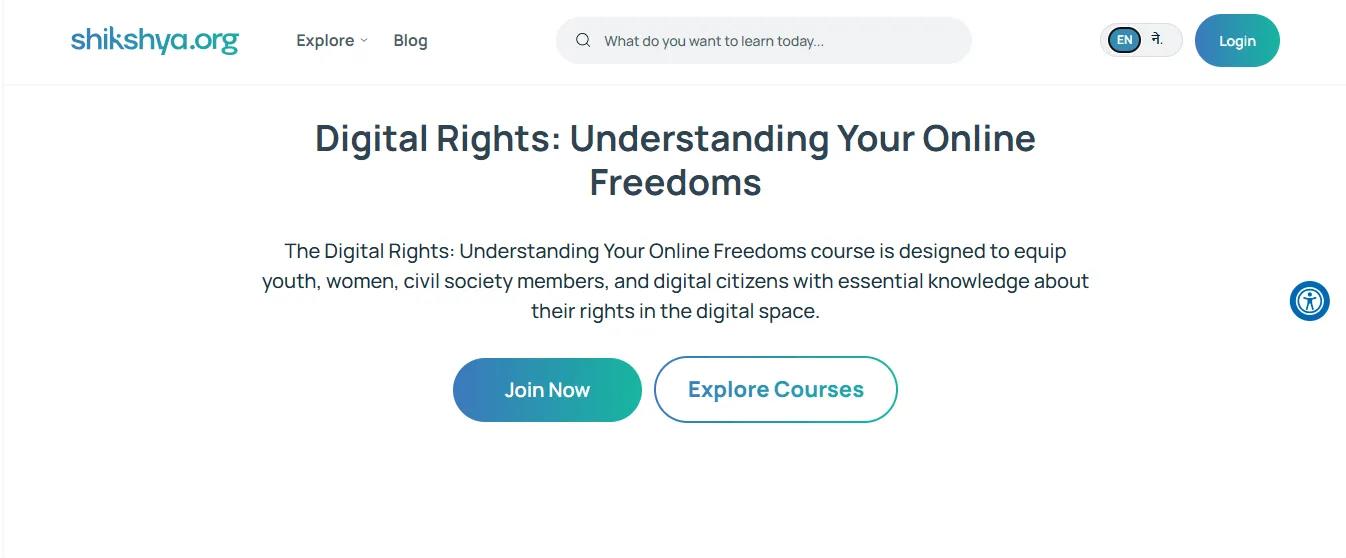
🔍 Click to expand
Year
2024
Duration
6 Months
Role
Frontend Developer
Scaling an Impact Driven E-Learning Platform Under Tight Deadlines: A Tech Lead’s Journey
At a Glance
Role: Senior Frontend Developer & Technical Lead
The Team: Mentored and guided 4 junior developers to successful project completion.
The Challenge: Delivering a feature-rich, dual language e-learning platform targeting journalists under severe time constraints while maintaining zero-bug production standards.
The Solution: Built a robust React/Vite architecture, instituted rigorous code review and stakeholder communication loops, and championed a shift from manual bottlenecks to automated testing using Cypress and Husky.
The Backstory: Empowering Journalists for Social Impact
In an era where reliable information is more critical than ever, we set out to build an e-learning platform designed specifically with social impact and community wellbeing in mind. While the platform catered to general learners and teachers, its primary focus was empowering journalists helping them refine how they convey complex messages, conduct deep research, and engage communities responsibly.
Under the hood, the platform was packed with features: sequential module progression, interactive quizzes, video discussions, downloadable certificates, a competitive leaderboard, and a dynamic coupon system for course enrolments. Furthermore, to make it genuinely accessible, we built full dual-language support for English and Nepali using i18n.
As the Senior Frontend Developer, my responsibilities extended far beyond writing code. I was tasked with leading a team of developers, bridging the communication gap between technical teams and non-technical stakeholders, driving code reviews, and steering the project across the finish line under intense time constraints.
The Core Challenge: Tight Deadlines and Team Growth
Building a complex learning management system complete with locked module states, real-time API interactions via React Query, and localized UI is hard enough. Doing it in a tightly constrained timeline while mentoring junior developers introduced a massive balancing act.
My biggest hurdle wasn't just shipping code on time; it was ensuring that code quality remained high, technical debt didn't pile up, and my team felt supported rather than overwhelmed. With multiple developers pushing code simultaneously, how do you prevent broken builds, merge conflicts, and buggy deployments without spending hours in manual code reviews?
The Leadership Dilemma: How do you accelerate delivery speed while levelling up a junior team, managing stakeholder expectations, and maintaining pristine production quality?
The Strategy: Communication, Quality Gates, and Cultural Shifts
To solve this, I focused on three foundational pillars: stakeholder alignment, proactive code quality enforcement, and collaborative mentorship.
1. Bridging the Gap: Effective Stakeholder Communication
In tight deadline projects, miscommunication between technical execution and business expectations is often what causes failure. I took charge of managing stakeholder communication by:
Translating complex technical constraints into clear, business-impact terms.
Running regular syncs to manage scope creep and align feature delivery with real-world user needs (especially focusing on how journalists and teachers would interact with the platform).
Establishing transparent milestone tracking so stakeholders always knew where we stood, building trust and eliminating last-minute surprises.
2. Elevating Code Reviews into Learning Moments
Code reviews shouldn't just be a gatekeeping mechanism, they should be an educational tool. With four developers on the team, I transformed our code review process from a bottleneck into a mentorship pipeline:
I established clear component architecture patterns using React with Vite, global state management via React Context, and structured API data fetching through React Query (backed by our Django backend and Swagger UI for API documentation).
Instead of just pointing out errors, I left constructive feedback explaining why a certain approach was better (e.g., state optimization, avoiding unnecessary re-renders, or cleaner routing logic).
Over time, the quality of pull requests improved dramatically, and the developers began catching similar issues on their own.
3. Shift-Left Quality with Husky and Git Hooks
To ensure no bugs were pushed or requested with errors, I implemented Husky to automate our pre-commit and pre-push workflows. Before a line of code could even be requested for a merge, Husky automatically ran linters, formatters, and conflict checks locally. This drastically cut down the back-and-forth in PR reviews and kept our main branch clean.
4. Replacing Manual Testing Fatigue with Automation (Cypress)
Initially, testing was a massive manual bottleneck. Every day, features were checked by hand, eating up precious time as deadlines loomed.
I spearheaded an initiative to implement comprehensive Cypress testing covering component testing, visual testing, unit testing, and full end-to-end (E2E) flows for core user journeys like quiz completion, module locking logic, and certificate generation.
An unexpected and deeply rewarding win from this transition was watching our manual tester embrace learning new things. By working alongside our automation efforts, our manual tester became deeply interested in Cypress, learned test automation, and transitioned into writing and maintaining automated test suites alongside the development team!
The Impact: Delivering on Time, Zero Production Stress
By treating developer experience, stakeholder transparency, and quality assurance as first-class citizens, the results spoke for themselves:
On-Time, Bug-Free Launch: Successfully shipped a complex, bilingual (English/Nepali) platform within a strict timeline without a single critical bug escaping into production.
Team Growth & Upskilling: Guided four junior developers to write production-grade code autonomously, and helped our manual tester successfully transition into automated testing (Cypress).
Streamlined Operations: Eliminated manual testing bottlenecks and drastically reduced PR review cycles through Husky pre-commit hooks and structured code reviews.
Socially Impactful Reach: Delivered a high-performance platform tailored to help journalists and community builders learn, connect, and grow.
Key Takeaways
This project reinforced a vital lesson for technical leaders: Speed doesn't come from cutting corners, it comes from building guardrails and empowering people. By prioritizing clear communication with stakeholders, investing time in mentoring juniors, and automating quality assurance, we didn't just ship a product we built a resilient, high-performing team.
More Related Case Studies
Explore additional engineering and architectural projects.

1 MIN READ

web apps
gharharu
house
framer motion
+1

2 MIN READ
web apps
react
nextjs
jsonplaceholder
+1
Postup is a high-performance application designed to demonstrate how a modern React application should handle heavy API interactions without sacrificing user experience. While it looks like a clean, professional social feed on the surface, the project is actually a technical playground I built to master the `plumbing` of Next.js. Instead of just fetching a static list of items, I used the JSONPlaceholder API as a live data source to implement complex UI patterns that you’d find in production grade apps like Twitter or LinkedIn.
What’s under the hood?
The project focuses on three main pillars of modern web development:
Advanced Data Orchestration: Rather than dumping all the data on the page at once, I implemented Infinite Loading and Lazy Loading. This ensures the browser only processes what the user is actually looking at, keeping the memory footprint low and the scrolling "buttery" smooth.
Next.js Server Actions: I used this project to stress-test Server Actions. Moving away from traditional `api/route.ts` setups and instead handling data fetching and mutations directly through server-side functions. This makes the app feel faster and keeps sensitive logic off the client side.
The UI Component Architecture: I didn't just throw together a bunch of divs. I built a library of reusable, state aware components. Whether it’s a skeleton loader for a post or a responsive navigation bar, every element is designed to be modular. If I need to change the look of a card, I change it in one place, and the entire app follows.

2 MIN READ
web apps
react
vite
nodejs
+1
EmployeeDB is a robust web application designed for efficient employee management and recognition. Whether you’re looking to add, update, or remove employee records or nominate someone for "Employee of the Month," EmployeeDB offers an intuitive platform for all your needs.
Key Features
1. Employee Management
Add Employee: Enter new employee details, including name, contact information. The system validates entries to ensure data accuracy.
Update Employee: Edit existing employee information, or updates to contact details.
Delete Employee: Remove employee records.
2. Employee of the Month Nominations
Nominate Employee: Nominate employees for the "Employee of the Month" based on criteria such as performance, achievements, or contributions. The nomination form allows users to detail the reasons for their nomination.
Review Nominations: View and manage current nominations.
Detailed Workflow
1. Add/Edit Employee Form
Input Fields: Name, Phone Number, Email, Address, etc.
Validation: Enforce data accuracy with field validation and error messages.
User Experience
Intuitive Interface: Designed for ease of use with a user-friendly layout.
Responsive Design: Accessible from desktop and mobile devices for on-the-go management.
EmployeeDB offers a streamlined, efficient, and secure way to manage employee records and recognize exceptional employees. With its user-friendly interface and powerful features, EmployeeDB is designed to enhance operations and foster a positive work environment.
