#React
#Ant'D
#web-apps
Classiestate
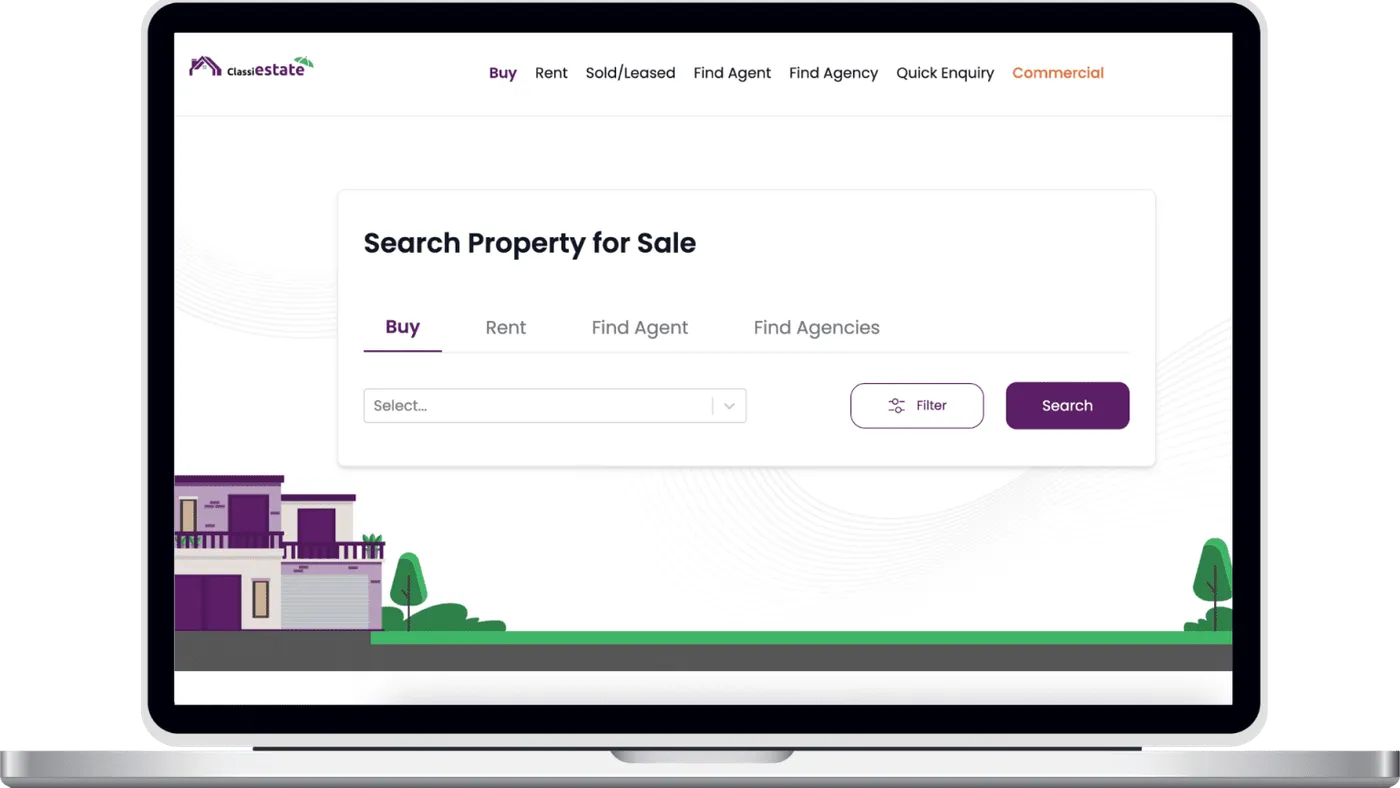
🔍 Click to expand
Year
2020
Duration
2 Months
Role
React Developer
Classiestate — Real Estate E-Commerce Platform Role: Frontend Developer Intern Project Type: Real Estate Marketplace / Web Application Primary Market: Australia Technologies: React.js, Redux, RxJS, Redux Observable, Node.js, Ant Design, LESS CSS, Firebase Testing: Manual testing with Excel, QA collaboration 1. Project Overview Classiestate is a real estate e-commerce platform designed to simplify the process of buying, selling, and renting properties. The application connects property buyers and renters with property owners and real estate agents, providing a centralised platform where users can discover properties, explore property details, and communicate with relevant stakeholders. The platform was developed with a primary focus on the Australian real estate market while aiming to serve a broader international audience. My primary responsibility was to develop the frontend application from the ground up across its major features. As the sole frontend developer during my internship, I implemented the user interface, integrated backend APIs, developed interactive search and filtering functionality, implemented map-based property navigation, and built responsive layouts for different screen sizes. The project gave me the opportunity to work extensively with React.js, Redux, RxJS, Redux Observable, Ant Design, LESS CSS, and Firebase while contributing to a real-world product. Project highlights Delivered more than eight frontend features. Completed five major modules. Reported a 40% performance improvement. Reported a 30% increase in user engagement. Implemented Firebase-based notifications. Developed property search, advanced filtering, property listings, property details, blogs, map navigation, and responsive interfaces. Note: The performance and engagement figures should be accompanied by their measurement period, baseline, and measurement method in a published portfolio wherever possible. 2. The Problem Finding a suitable property can be a complicated process. Buyers and renters often need to compare numerous listings, narrow their choices according to specific preferences, understand property locations, and contact agents or property owners to obtain additional information. For sellers, landlords, and agents, presenting property information clearly and connecting with interested users are equally important. Classiestate aimed to address these challenges by bringing property discovery, detailed property information, location-based navigation, and communication into a single web application. The primary challenge was to make the experience intuitive and efficient for users while ensuring that the frontend remained maintainable, responsive, and reliable as the application grew. 3. Project Objectives The project focused on the following objectives: Simplify property discovery: Enable users to find suitable properties through search and filtering. Improve property exploration: Present detailed property information in an accessible, organised interface. Enable location-based discovery: Help users understand where properties are located through interactive maps. Support property providers: Give sellers, landlords, and agents a platform to showcase their properties. Improve accessibility across devices: Ensure that the interface works across desktop, tablet, and mobile screen sizes. Create a consistent experience: Use reusable components and a shared design system to maintain UI consistency. Support timely communication: Integrate notification functionality using Firebase. 4. My Role and Responsibilities I worked as the sole frontend developer, collaborating closely with backend engineers, QA engineers, and project managers. I was responsible for implementing the frontend features, translating designs into functional interfaces, integrating APIs, managing application state, and refining the user experience throughout development. My responsibilities included: Developing reusable React components and application interfaces. Implementing property search and filtering functionality. Building property listing and property detail pages. Implementing map-based navigation and property location visualisation. Developing blog interfaces and responsive layouts. Integrating backend APIs and managing asynchronous data flows. Implementing state management using Redux, RxJS, and Redux Observable. Integrating Firebase-based notifications. Styling and customising components using Ant Design and LESS CSS. Testing frontend functionality and collaborating with QA to identify and resolve issues. Iteratively improving the application based on requirements and stakeholder feedback. Working independently on the frontend required me to take ownership of implementation decisions while maintaining regular communication with the wider team. 5. Key Features and Technical Implementation 5.1 Property Search and Advanced Filtering Objective: Help users discover relevant properties without having to browse every available listing manually. I implemented the property search and filtering experience, allowing users to narrow down available properties based on their search criteria. This was one of the more challenging areas of the application because the interface needed to coordinate user input, filter selections, property data, and map navigation. The implementation required careful consideration of how filter state was managed and how changes to the search criteria affected the displayed results. My work focused on: Implementing search interfaces and filter controls. Connecting search and filtering interactions to the relevant application data. Managing filter state using the application's state-management patterns. Integrating API requests to retrieve matching property data. Updating the interface in response to changes in search criteria. Ensuring the experience remained usable across different screen sizes. The main technical challenge was maintaining consistent behaviour as users changed filters and navigated between property listings and map-based views. I addressed this by studying the existing Redux and Redux Observable patterns, reviewing the application's data flow, and refining the implementation through testing and iteration. Outcome: A more structured property discovery experience that allowed users to narrow their choices and explore relevant listings more efficiently. Suggested image placeholder — Property Search and Filters [Insert a screenshot showing the property search interface, available filter controls, selected search criteria, and resulting property listings.] Caption: Property discovery interface with search and filtering controls designed to help users narrow down available listings. 5.2 Property Listings Objective: Present available properties in a clear, consistent, and easy-to-browse format. I developed the property listing interfaces used to display available properties to prospective buyers and renters. The focus was on making essential property information easy to scan while maintaining a consistent layout across the application. The implementation involved building reusable React components, integrating property data from backend APIs, and using Ant Design components to maintain consistency throughout the interface. I also considered responsive behaviour to ensure that the listings remained accessible on smaller screens. Outcome: A reusable property listing experience that supported browsing and connected users to individual property detail pages. Suggested image placeholder — Property Listing Grid [Insert a desktop screenshot displaying multiple property cards with property images, prices, locations, key details, and navigation links.] Caption: Responsive property listings that present essential information in a consistent and scannable layout. 5.3 Property Details Objective: Give users enough information to evaluate a property before contacting the seller, landlord, or agent. I implemented the property detail pages, bringing together the information users need when exploring an individual listing. The frontend was structured to present property information clearly, with attention to layout, readability, reusable components, and navigation between the listing and detail views. The implementation also involved integrating the relevant property data through APIs and ensuring that the interface adapted to different screen sizes. Outcome: A dedicated property exploration experience that helped users review individual listings and continue their property search with greater context. Suggested image placeholder — Property Details Page [Insert a screenshot of a complete property detail page showing the main property image, price, location, description, property attributes, and map or contact section where applicable.] Caption: Detailed property view combining listing information, visual content, and location context in one interface. 5.4 Interactive Map and Property Navigation Objective: Help users understand property locations and explore listings geographically. Map implementation was one of the most challenging parts of the project. Unlike a conventional listing page, a map-based interface requires users to move between geographic locations while maintaining a useful connection between the map and the available property information. I implemented the frontend map experience and worked on integrating property location data into the interface. The key considerations included: Displaying property locations on the map. Coordinating map navigation with the property discovery experience. Maintaining consistency between map interactions and property information. Ensuring that map-related UI elements worked alongside search and filtering. Adapting the interface for different viewport sizes. The challenge was ensuring that map navigation and filtering worked together without making the experience confusing or inconsistent. I approached this by examining the existing application architecture, understanding how property data flowed through the frontend, and iteratively testing interactions between the map and other discovery components. Outcome: An additional way for users to explore property locations and navigate the available listings beyond a conventional list-based interface. Suggested image placeholder — Map-Based Property Discovery [Insert a screenshot showing the interactive map, visible property markers, and the corresponding property listings or selected property information.] Caption: Map-based property discovery connecting geographic navigation with property search results. 5.5 Responsive Web Design Objective: Deliver a consistent property discovery experience across desktop, tablet, and mobile devices. I implemented responsive layouts across the frontend, adapting components and page structures to different screen sizes. This required consideration of how property cards, filter controls, navigation elements, maps, and detailed property information should behave when the available screen space changed. Using Ant Design and LESS CSS, I refined component styling and layout behaviour to maintain usability and visual consistency across different devices. Outcome: A more accessible and consistent interface across screen sizes, allowing users to explore properties on different devices. Suggested image placeholder — Responsive Design [Insert a three-device comparison showing the same Classiestate page on desktop, tablet, and mobile. Use the property listing or property detail page for the comparison.] Caption: Responsive frontend implementation adapting the property discovery experience to desktop, tablet, and mobile screens. 5.6 Blog Module Objective: Provide a dedicated interface for property-related articles and informational content. I developed the frontend for the blog module, focusing on presenting content in a structured and readable format. This involved implementing the required page layouts and reusable components, integrating the relevant data, and maintaining consistency with the wider application's design system. Outcome: A dedicated content experience that extended the application beyond property listings and supported the presentation of real estate-related information. Suggested image placeholder — Blog and Article Pages [Insert a screenshot of the blog landing page with article cards, followed by a second screenshot of an individual article page if available.] Caption: Blog interfaces presenting real estate-related content through a consistent and readable layout. 5.7 Firebase Notifications Objective: Support notification functionality within the application. I integrated Firebase-based notifications as part of the frontend implementation. This gave me practical exposure to using a managed backend service to support notification-related functionality. The work helped me understand how frontend interfaces interact with notification services and how asynchronous events can be incorporated into an application. Outcome: Firebase notification functionality was integrated into the application. Suggested image placeholder — Notification Interface [Insert a screenshot of a representative notification UI or notification-related interaction, ensuring that personal information and any private user data are removed.] Caption: Notification functionality integrated into the frontend using Firebase. 6. Technology Stack and Architecture The application used a combination of frontend libraries, state-management tools, styling technologies, and backend services. Technology Purpose React.js Component-based UI development Redux Centralised application state management RxJS Reactive programming and asynchronous data handling Redux Observable Managing asynchronous application workflows Ant Design Reusable UI components and design consistency LESS CSS Component styling and UI customisation Node.js Backend runtime within the project's wider technology stack Firebase Notification-related functionality Excel Organising manual testing activities My work was primarily focused on the frontend. Node.js formed part of the wider application stack, and I collaborated with backend engineers on API integration rather than claiming ownership of the backend implementation. Frontend Architecture The frontend relied on reusable React components to organise the interface into maintainable units. Redux supported application state management, while RxJS and Redux Observable were used for asynchronous workflows. Ant Design provided reusable interface components, with LESS CSS supporting custom styling. Backend APIs supplied application data, and Firebase supported notification-related functionality. This combination allowed me to work across UI implementation, application state, asynchronous operations, and service integration while maintaining consistency across the major features. 7. Challenges and Solutions Learning an unfamiliar technology stack This was my first internship, and several technologies used by the project were new to me. Learning Ant Design, LESS CSS, RxJS, and Redux Observable while contributing to an established application required sustained effort. Solution: I studied official documentation, reviewed existing implementations, researched unfamiliar concepts, and applied what I learned directly to the project. Regular communication with other team members also helped me understand the codebase and clarify requirements. Coordinating search filters and application state Search and filtering involved multiple UI controls, property data, and application state. Keeping the interface consistent as users changed their search criteria was a significant technical challenge. Solution: I examined the existing state-management patterns, traced how data moved between components and APIs, and refined the implementation through iterative testing. Implementing map navigation Map-based property discovery introduced additional complexity because geographic interactions needed to work alongside property listings and filtering. Solution: I approached the implementation incrementally, tested the interactions between map navigation and property data, and worked to maintain a consistent experience between different discovery views. Delivering features while learning The project required me to develop technical knowledge and deliver working functionality at the same time. Solution: I combined independent research with practical implementation and frequent feedback. Working closely with backend engineers, QA, and project managers helped me identify issues early and keep my work aligned with project requirements. 8. Project Outcomes and Impact The project resulted in a functioning real estate platform with frontend functionality supporting property discovery, content browsing, and location-based navigation. My contributions covered more than eight frontend features across five completed modules, including search and filtering, property listings, property details, maps, blogs, responsive design, and Firebase-based notifications. The project reported the following improvements: 40% performance improvement. A reported improvement in application performance during the project. 30% increase in user engagement. A reported increase in engagement with the platform. More than eight frontend features delivered. Implementation across the application's major user-facing capabilities. Five modules completed. Contribution to the delivery of key application modules. The development process involved ongoing collaboration and iterative refinement. Regular communication with stakeholders and feedback from testing helped identify opportunities to improve functionality and the overall user experience. Measurement note: The performance and engagement figures are project-reported results. Before publishing, specify how performance was measured, which engagement metric increased, and the comparison period. If these figures cannot be independently verified, label them as reported project outcomes rather than attributing the entire improvement solely to the frontend implementation. 9. Key Learnings Classiestate was a significant learning experience because it allowed me to apply frontend engineering concepts to a real-world product while working as the sole frontend developer. My key learnings included: Frontend engineering: Building reusable components and implementing complete user-facing features with React.js. State management: Working with Redux and understanding how shared application state affects UI behaviour. Reactive programming: Developing practical familiarity with RxJS and Redux Observable. Design systems: Learning how to use Ant Design to create consistent interfaces. Styling: Applying LESS CSS to customise components and implement responsive layouts. API integration: Connecting UI components to backend services and managing asynchronous data. Map-based interfaces: Understanding the additional complexity involved in synchronising geographic navigation with property discovery. Notifications: Gaining experience with Firebase-based notification functionality. Testing and collaboration: Working with QA engineers and cross-functional stakeholders to refine features. Independent problem-solving: Learning unfamiliar technologies through documentation, research, code review, and practical implementation. Beyond technical knowledge, I became more confident in navigating an existing codebase, breaking complex UI requirements into manageable tasks, and collaborating with other engineers to deliver working features. 10. Conclusion Classiestate provided my first opportunity to contribute extensively to a real-world web application as a frontend developer. Being responsible for the frontend across the major features challenged me to learn new technologies, understand an existing application architecture, and implement functionality that served real user needs. From building search and filtering experiences to implementing map navigation and property detail pages, I gained practical experience in solving UI problems that required careful coordination between application state, backend data, and user interactions. The project strengthened my foundations in React.js, Redux, RxJS, Redux Observable, Ant Design, LESS CSS, API integration, and Firebase. It also taught me the importance of continuous learning, iterative development, and cross-functional collaboration. Most importantly, Classiestate helped me transition from learning frontend development in theory to applying it in a professional environment, building the confidence to take ownership of complex features and contribute to larger software projects.
More Related Case Studies
Explore additional engineering and architectural projects.

1 MIN READ

nextjs
web-apps
Introduction
Aba padhxu is a e-commerce platform where you can buy and sell books . Sign up as a seller and start selling your books.
4 MIN READ
wfc
weforchange
nextjs
react
+7
5 MIN READ
Shikshya
react
vite
web-apps
+4
4 MIN READ
React
vite